Why a Gooseneck Hitch Extension is Non-Negotiable for Short Bed Trucks
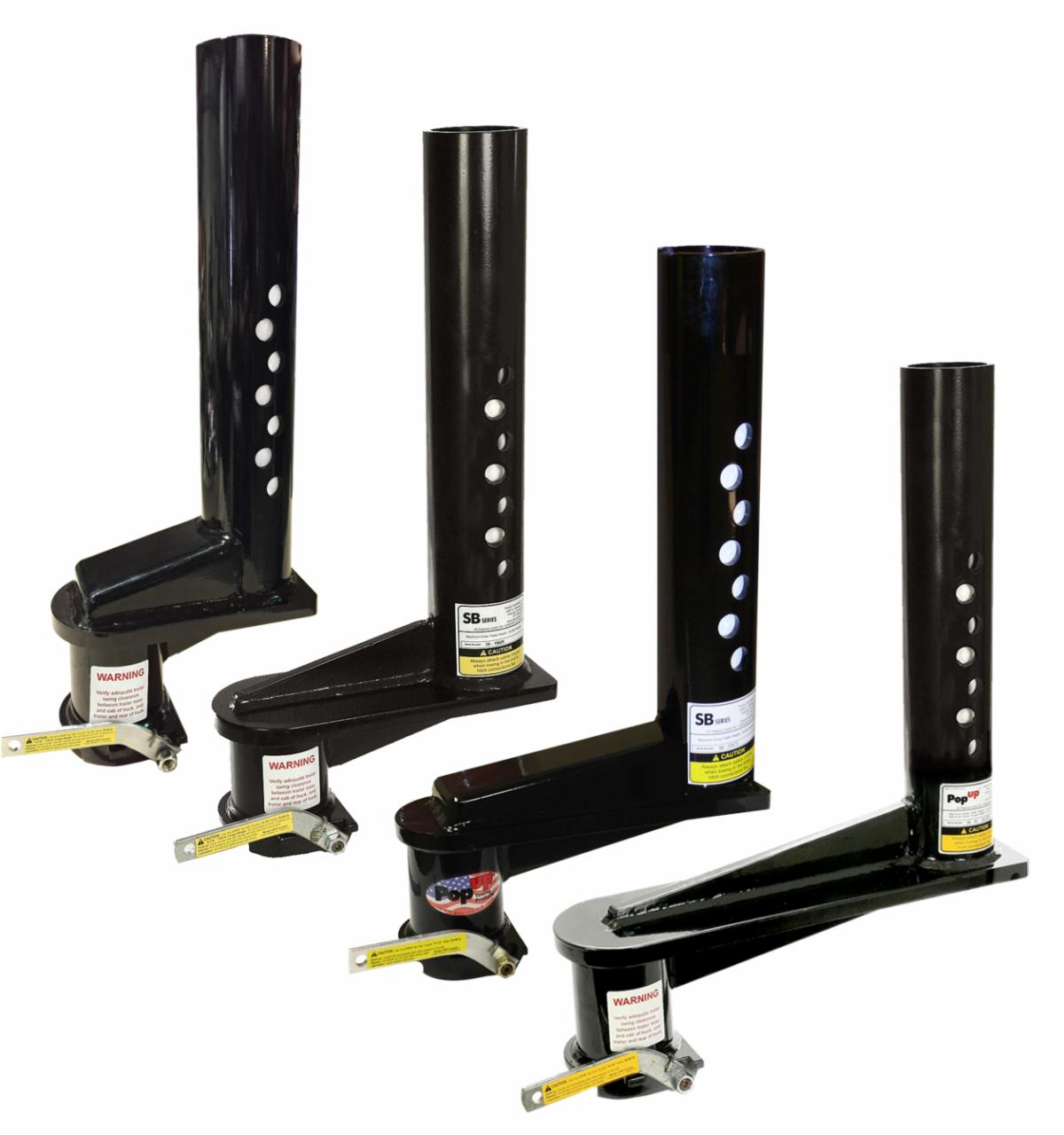
The Geometry Problem: Why Short Beds and Goosenecks Clash
A gooseneck hitch extension for short bed trucks is not just a luxury upgrade — it is a crucial safety feature due to the geometry of your pickup.
The core issue is distance. A standard long bed measures roughly 8 feet, giving the gooseneck coupler generous swing clearance during turns. A short bed, typically around 5.5 feet, reduces that gap significantly. The rear axle sits closer to the cab, which means the trailer nose has far less room to arc before it contacts the rear window. As Driving Line notes, "the main problem with towing a gooseneck with a short bed truck is the clearance between the trailer nose and the truck cab." That problem is not theoretical — it is physics.
The danger zone typically runs from about 45 to 60 degrees of articulation. Within that range of turn angle, a trailer neck traveling over a standard ball position will swing directly into the rear glass. Most drivers encounter this zone without warning at gas stations, campsite entry points, or sharp highway on-ramps — exactly the moments when a full stop or course correction is not always possible.
A standard hitch ball mounted at the stock position simply does not create enough lateral swing clearance to absorb a tight turn safely. Moving the pivot point rearward is the only mechanical solution — and that is precisely what offset extensions are engineered to do.
The 9-12-Inch Solution: How Offset Extensions Save Your Rear Window
A gooseneck hitch extension solves the short bed clearance problem by moving the trailer's pivot point rearward — creating a physical buffer between the coupler arm and your cab.
Moving the pivot point back is the core mechanical fix. When the hitch ball sits directly over the truck's axle, a short bed provides almost no angular tolerance before the trailer neck contacts the cab. Shifting that ball rearward by even 9 or 10 inches repositions where the rotation arc begins, buying critical separation during tight turns. The difference between a 9-inch and 10-inch offset may sound trivial, but on a standard 5.5- or 6-foot box, that extra inch can mean the difference between a clean swing and a cracked rear window under a sharp angle.
A common concern is whether an extended mounting platform affects towing capacity. In practice, well-engineered extensions maintain full rated loads through reinforced steel construction and precision ball placement. The PopUp RV5, a leading pop up gooseneck hitch short bed solution, demonstrates this directly — it provides a 10-inch rearward offset while carrying a 24,000 lb Gross Trailer Weight rating, according to Etrailer.com. That is a heavy-duty number that matches or exceeds what most short bed trucks can pull.
The mechanical advantages of a quality offset extension include:
Rearward ball placement that increases angular clearance during turns
Reinforced steel platforms that distribute tongue weight without flex
Maintained GTW ratings comparable to standard in-bed setups
Compatibility with existing hitch receivers, avoiding costly reinstallation
A 10-inch offset is the practical standard for most short bed owners. Extensions meeting that threshold consistently deliver enough clearance for real-world towing conditions — though the next piece of the puzzle goes beyond straight-line geometry and into how that extra distance performs when you need a full-lock turn.
Maneuverability and Safety: Beyond the Straight Line
Driving with a gooseneck trailer is manageable on the highway — but the real test of your setup happens the moment you need to turn, reverse, or change direction under pressure.
With a standard ball position in a short bed truck, the trailer neck sits close enough to your cab that a sharp 90-degree turn creates an almost immediate collision risk. According to PopUp Towing Products, a 9-inch or 10-inch offset extension provides the necessary clearance to prevent the trailer nose from striking the truck cab during tight 90-degree turns. That single measurement is the difference between a routine parking maneuver and a shattered rear window.
Knowing how to prevent breaking a rear window while towing a gooseneck starts with getting the geometry right — not with driving more carefully.
The idea of "just being careful" tends to break down exactly when you need it most. Emergency U-turns, unexpected detours through tight ranch gates, or reversing into a loading dock do not allow time for slow, calculated movements. In those moments, your truck either has the clearance or it does not. A short bed setup without an extension places your C-pillar and rear glass under constant stress risk — and structural damage to that area is both expensive and safety-critical.
An extension does not just protect your truck. It restores the low-speed confidence that makes maneuvering feel natural rather than anxious. You can back into a tight spot, execute a sharp turn at a gas station, and respond to road conditions without second-guessing every degree of your steering wheel. That operational freedom is what proper equipment delivers.
Choosing the right extension raises a practical question: what does installation involve, and is a short bed compatible with a full gooseneck system?
Installation and Fitment: Can You Put a Gooseneck in a Short Bed?
Short bed trucks — typically those with a 6.5-foot bed — are fully compatible with gooseneck towing when you pair them with the right hitch setup. The question most owners ask first is, "will a gooseneck trailer hit my short bed cab?" And the honest answer is: it depends entirely on whether your hitch is positioned correctly. With a standard center-mounted ball, cab contact during turns is a real risk. With the right extension, that risk disappears.
The hitch you choose determines your clearance, not the bed length itself.
Two primary installation types exist for short bed applications. Weld-in hitches are permanently integrated into the truck frame, offering maximum strength and a clean finish, but they require professional fabrication and are not easily removed. Bolt-in popup hitches, by contrast, mount using existing frame points and feature a ball that drops below the bed floor when not in use — preserving bed access and reducing installation complexity. According to etrailer.com, bolt-in systems are generally the practical choice for short bed owners who want flexibility.
A quick note on terminology: "standard bed" and "short bed" are often used interchangeably, which causes genuine confusion when shopping for hitches. In most manufacturer specs, a standard bed runs 6.5 feet — and that measurement matters for fitment, not the label.
On cost, professional installation for a weld-in hitch typically runs $300–$600 in labor alone, while bolt-in kits lean toward DIY-friendly designs that can reduce that expense significantly. That said, improper installation carries serious safety consequences, so an investment in professional fitting often tends to be worth it — especially before you start weighing the weight capacity implications your setup will need to handle.
The CDL and Weight Capacity Question
Gooseneck towing sits at the intersection of serious hauling power and strict regulatory thresholds — and understanding where the legal lines fall can save you from costly surprises.
The critical number for most drivers is 26,001 lbs GCWR. Cross that Gross Combined Weight Rating threshold, and you are legally required to hold a Commercial Driver's License in most states. For recreational haulers and livestock operators towing with a standard pickup, staying under that ceiling is a practical priority, not just a legal formality. Most Class III and IV trucks equipped with a gooseneck hitch comfortably operate below it — but only when the full towing system, including the hitch extension, is rated to match.
Hitch extension ratings matter here more than many drivers realize. An offset gooseneck ball for short bed applications must maintain the same Gross Trailer Weight rating as the base hitch — not reduce it. Products like the PopUp RV5 support a 6,000 lb tongue weight, ensuring that adding offset clearance does not come at the cost of payload capacity. That is a critical distinction: the extension is not a weak link; it is a rated component in the chain.
High-tensile strength becomes non-negotiable when you are pulling a 40-foot trailer. At that length, dynamic load forces — sway, braking momentum, and road shock — amplify significantly. A lower-grade extension introduces flex that undermines steering feedback and braking precision.
On the other side of the ledger, gooseneck setups do consume meaningful bed space, and that trade-off is real. But for short bed owners, a properly rated extension tends to work better than accepting limited turning radius as a fixed constraint. Before you finalize any purchase decision, measurement and weight capacity verification deserve a closer look — which brings us to the most overlooked step in the entire setup process.
Summary: What You Need to Know Before You Tow
Short bed truck owners who tow gooseneck trailers face a clear, solvable problem — but only if they address it with the right hardware before the first pull.
The core takeaways from everything covered above distill into four actionable points:
A 9-inch offset is the minimum safe threshold. Short bed trucks need at least a 9-inch extension to execute 90-degree turns without the trailer nose contacting the cab. According to MrTruck.com, turns exceeding 45–60 degrees will likely result in cab impact without an extension in place.
Pop Up extensions preserve serious towing capacity. Quality Pop Up hitches maintain gross trailer weight ratings up to 24,000 lbs, so you are not trading capability for clearance.
Cab damage is a hardware problem, not a driver skill problem. Relying on careful driving to avoid contact is not a strategy — it is a liability. The right extension eliminates the risk mechanically, not behaviorally.
Measurement comes before purchase, every time. As etrailer.com confirms, the critical dimension is the distance from the ball center to the rear of the cab. That number determines which extension fits your specific truck and trailer combination.
The bottom line: no extension, no safe short-bed gooseneck towing. The geometry is unforgiving, and the consequences are expensive. And that measurement question — how to get it exactly right for your setup — is precisely where expert guidance makes all the difference, which is exactly what the next section addresses.
Get the Right Fit: Expert Measurement Advice from MrTruck
Generic fitment charts are a starting point, not a guarantee — and for short bed trucks with custom trailer noses, they often fall short entirely.
The critical measurement is ball center to cab back wall, taken horizontally across the bed. That single number determines whether a standard extension will work or whether you need a custom-length solution. But trailer noses vary considerably in geometry, and a chart built around average dimensions will not account for an unusually deep or shallow coupler profile. In practice, two trucks with identical bed lengths can require different extension specs simply because the trailers they pull are not built to the same nose template.
That is exactly why hands-on guidance from a seasoned professional tends to work better than any spreadsheet lookup. H. Kent Sundling of MrTruck.com has spent more than 26 years focused on towing safety, truck equipment, and real-world fitment scenarios. That depth of experience means he has encountered the edge cases that generic resources miss — the non-standard nose, the cab with an unusual profile, the trailer that looks compatible until it is not.
Call MrTruck directly at 303-883-1300 for help measuring your truck bed and validating your fitment before you tow. Getting a gooseneck hitch extension right the first time protects your cab, your trailer, and everyone sharing the road with you. Do not leave a decision this important to a chart.