Why a Gooseneck Hitch Extension is Non-Negotiable for Short Bed Trucks
The Geometry Problem: Why Short Beds and Goosenecks Clash
A gooseneck hitch extension for short bed truck setups is often considered a fundamental safety enhancement. The geometry simply does not work without one.
The core issue is distance. A standard long bed truck typically measures around 8 feet from the rear axle to the back of the cab, giving a gooseneck trailer's neck ample room to pivot through a turn. A short bed truck, typically 6.5 feet or less, shrinks that critical gap significantly. As DrivingLine notes, "the main problem with towing a gooseneck with a short bed truck is the clearance between the trailer nose and the truck cab." That reduced distance compresses the arc the trailer neck can travel before it contacts something solid.
The danger zone sits between 45 and 60 degrees of articulation. In practice, that range is exactly what you encounter pulling into a gas station, navigating a campsite loop, or making a sharp u-turn on a rural road. At those angles, the trailer neck swings directly toward the rear cab window. A standard ball mounted at the center of the truck bed provides zero additional buffer — the pivot point stays too close to the cab, and the geometry works against you on every tight maneuver.
And the consequences are not minor. A cab strike at low speed may shatter your rear window, damage the trailer coupler, and leave you stranded. Understanding why this clash happens is the first step — but solving it requires moving that pivot point rearward, which is exactly what a quality offset extension is designed to do.
The 10-Inch Solution: How Offset Extensions Save Your Rear Window
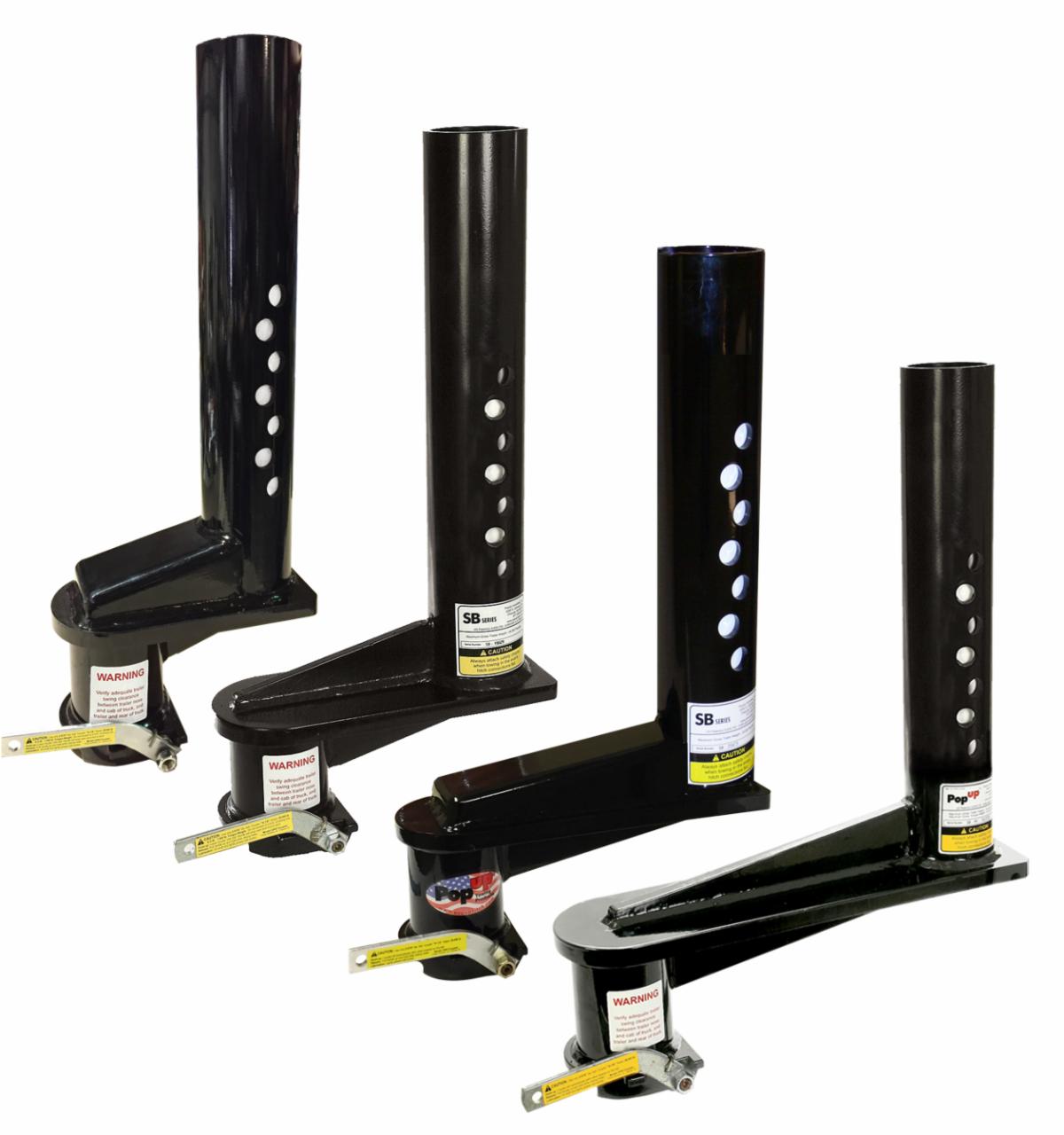
A gooseneck hitch extension works by relocating the pivot point rearward, converting a dangerous geometry problem into a manageable clearance buffer — and that single mechanical shift changes everything for short bed truck owners.
The core principle is straightforward. A standard gooseneck ball sits directly over the truck's rear axle. On a short bed, that position leaves the trailer neck swinging dangerously close to the cab during turns. An offset extension moves the ball 9 to 10 inches toward the tailgate, pushing the pivot point away from the cab and creating the clearance buffer the previous section established as non-negotiable.
Offset distance matters more than most buyers expect. A 9-inch offset can work adequately on some short bed configurations, but a 10-inch offset tends to provide a more reliable safety margin across a wider range of trailer neck heights and turning angles. The extra inch is not a marketing increment — it represents a meaningful reduction in cab contact risk during real-world maneuvering. For a practical pop up gooseneck hitch short bed solution with serious load capacity, the PopUp RV5 model delivers a 10-inch rearward offset paired with a 24,000 lb Gross Trailer Weight rating, according to Etrailer.com.
A common concern among truck owners is whether an extension introduces a structural weak point under heavy loads. In practice, quality forged-steel extensions are engineered to handle the same forces as the hitch receiver itself. The mechanical benefits of a properly rated extension include:
- Distributed load transfer through a rigid steel shank, not a flexible joint
- Maintained ball height alignment with the trailer coupler
- No reduction in tongue weight capacity when matched to the hitch's rating
- Compatibility with existing fifth-wheel and gooseneck hitch platforms
That combination of offset geometry and verified load ratings makes the extension a structural solution — not a workaround. And once the clearance problem is solved, the next challenge shifts from static geometry to dynamic safety: what actually happens when you need to make a tight turn or an emergency maneuver at low speed.
Maneuverability and Safety: Beyond the Straight Line
Safe gooseneck towing is not just about the straight highway miles — it is what happens the moment you slow down, angle into a driveway, or need to make an emergency correction that determines real risk.
The ability to complete a full 90-degree turn without cab contact is the single most important functional test for any short bed gooseneck setup. According to PopUp Towing Products, a 9-inch or 10-inch offset extension provides exactly the clearance margin needed to pass that test. Without it, the trailer neck swings directly into the cab's C-pillar and rear glass during tight low-speed maneuvers — the precise conditions found in feed lots, campgrounds, and job sites.
Understanding how to prevent breaking the rear window while towing a gooseneck starts with recognizing that stress on the rear glass is cumulative. It is not always a single dramatic impact. Repeated near-contact episodes gradually weaken the seal and the surrounding frame, making catastrophic failure more likely over time.
And "just being careful" is not a viable safety strategy. In a genuine emergency — an unexpected obstacle, a child running into a lot, a sudden need to reverse course — there is no time to calculate turning radius. The geometry either allows a safe correction or it does not. An extension removes that variable entirely, giving you confidence that the truck's hardware is working with you, not against you. That confidence directly informs the installation decision covered in the next section.
Installation and Fitment: Can You Put a Gooseneck in a Short Bed?
Short bed trucks are fully compatible with gooseneck towing — the key is pairing the right hitch to the right bed length from the start. A question that comes up repeatedly among new gooseneck owners is, "will a gooseneck trailer hit my short bed cab?" The honest answer is: it will, unless the hitch is designed specifically to prevent it. That is why fitment decisions made during installation carry so much weight.
Bed length terminology creates real confusion in the shopping process. "Standard bed" and "short bed" are often used interchangeably to describe 6.5-foot configurations, but manufacturer specs do not always agree. Before purchasing any hitch or extension, confirm the actual measured bed length against the product's compatibility chart — not just the marketing label on the truck's window sticker.
Weld-in vs. bolt-in popup hitches represent the two primary installation paths. Weld-in setups offer a more permanent solution favored in commercial applications, while bolt-in popup designs allow for removal when the hitch is not in use — preserving bed access and, as etrailer.com notes, making short beds more practical for daily driving. Bolt-in options tend to work better for owners who split truck use between towing and hauling.
Professional installation typically runs between $200 and $500 depending on hitch type and labor market. A capable DIY installer with basic fabrication tools can reduce that cost significantly, though weld-in hitches always warrant professional work. Whichever route you choose, proper weight distribution and rating alignment matter just as much as the installation method itself — a point that connects directly to the capacity questions worth examining next.
The CDL and Weight Capacity Question
Understanding where your rig falls on the weight spectrum is one of the most consequential decisions you will make before hooking up a gooseneck trailer to a short bed truck.
A critical threshold that many drivers overlook is that once your Gross Combined Weight Rating (GCWR) exceeds 26,001 lbs, a Commercial Driver's License is federally required. For many heavy-duty gooseneck setups — particularly those pulling livestock, flatbed, or equipment trailers — that line is closer than it appears. A one-ton pickup rated at roughly 14,000 lbs GCWR combined with a loaded 40-foot trailer can push well past that number depending on payload. Knowing your truck's published GCWR before you load a single bale is non-negotiable.
Hitch extensions and GTW ratings interact in ways that catch buyers off guard. An offset gooseneck ball for short bed applications does not automatically reduce the hitch's rated Gross Trailer Weight — but the wrong extension can. Extensions built from lower-grade steel introduce flex under dynamic load, which degrades the effective rating of the entire connection point. The PopUp RV5, for example, supports a 6,000 lb tongue weight, confirming that a properly engineered extension maintains heavy-duty ratings rather than compromising them. High-tensile strength hardware is what makes that possible on longer trailers where leverage forces multiply at the ball.
On the other hand, gooseneck towing does come with a real trade-off: bed space loss. The hitch hardware occupies the center of the bed permanently or semi-permanently, limiting what you can haul when the trailer is unhitched. Pop-up style hitches address this partially by dropping below the bed floor when not in use, but the mounting rails still consume some floor area. Weigh that against the payload and stability advantages goosenecks offer over conventional fifth-wheel setups, and for most heavy haulers the trade-off leans clearly in favor of the gooseneck system.
Before you finalize any purchase decision, the weight numbers, CDL thresholds, and extension ratings all need to align — a point the next section will bring together into a clear pre-tow checklist.
Summary: What You Need to Know Before You Tow
Short bed truck owners can tow gooseneck trailers safely, but only when the right extension hardware and measurements are in place before the first hookup.
The four points below distill everything covered in this article into actionable guidance:
- A minimum 9-inch offset is non-negotiable. According to etrailer.com, turns beyond 45–60 degrees without an extension will likely produce cab contact — and MrTruck.com confirms that figure climbs dangerously at 90-degree angles.
- Pop Up hitches preserve your payload capacity. Quality popup-style extensions maintain GTW ratings up to 24,000 lbs, so you do not sacrifice towing performance to gain clearance.
- Cab damage is an engineering problem, not a driving skill problem. Relying on careful maneuvering instead of proper hardware is a false solution — one tight parking lot turn is all it takes.
- Measurement comes before purchase, every time. The distance from ball center to cab wall determines which extension will actually work for your specific truck and trailer nose combination.
The right extension does not just add convenience — it is the mechanical difference between a legal, safe setup and a liability on every turn you make.
Getting those measurements right, however, is where many owners still fall short. Generic sizing charts do not account for custom trailer nose profiles or cab-to-axle variations, which is exactly why expert fitment validation matters before you buy.
Get the Right Fit: Expert Measurement Advice from MrTruck
Generic sizing charts are a reasonable starting point, but they often fall short when your trailer has a custom nose profile that does not match standard geometry. A chart built around a conventional gooseneck coupler may not account for the unique arc your specific trailer cuts through your bed during a sharp turn. That gap between what a chart predicts and what your rig actually does is where contact damage happens.
The single most important measurement you can take is the distance from the ball center to the back wall of your cab. That number, combined with the height of the coupler and the angle of your trailer's neck, determines whether a given extension will clear the cab or create a collision point under hard articulation. Without it, you are guessing — and guessing wrong with a loaded gooseneck trailer carries serious consequences.
H. Kent Sundling of MrTruck brings 26 years of hands-on towing safety expertise to exactly this kind of fitment question. Rather than working from assumptions, he offers direct guidance tailored to your specific truck and trailer combination. As he puts it, "Call me for how to measure your truck bed. 303-883-1300." That call can be the difference between a setup that works safely and one that fails dangerously. Before you purchase any extension hardware, validate your measurements with someone who has spent decades solving this exact problem.